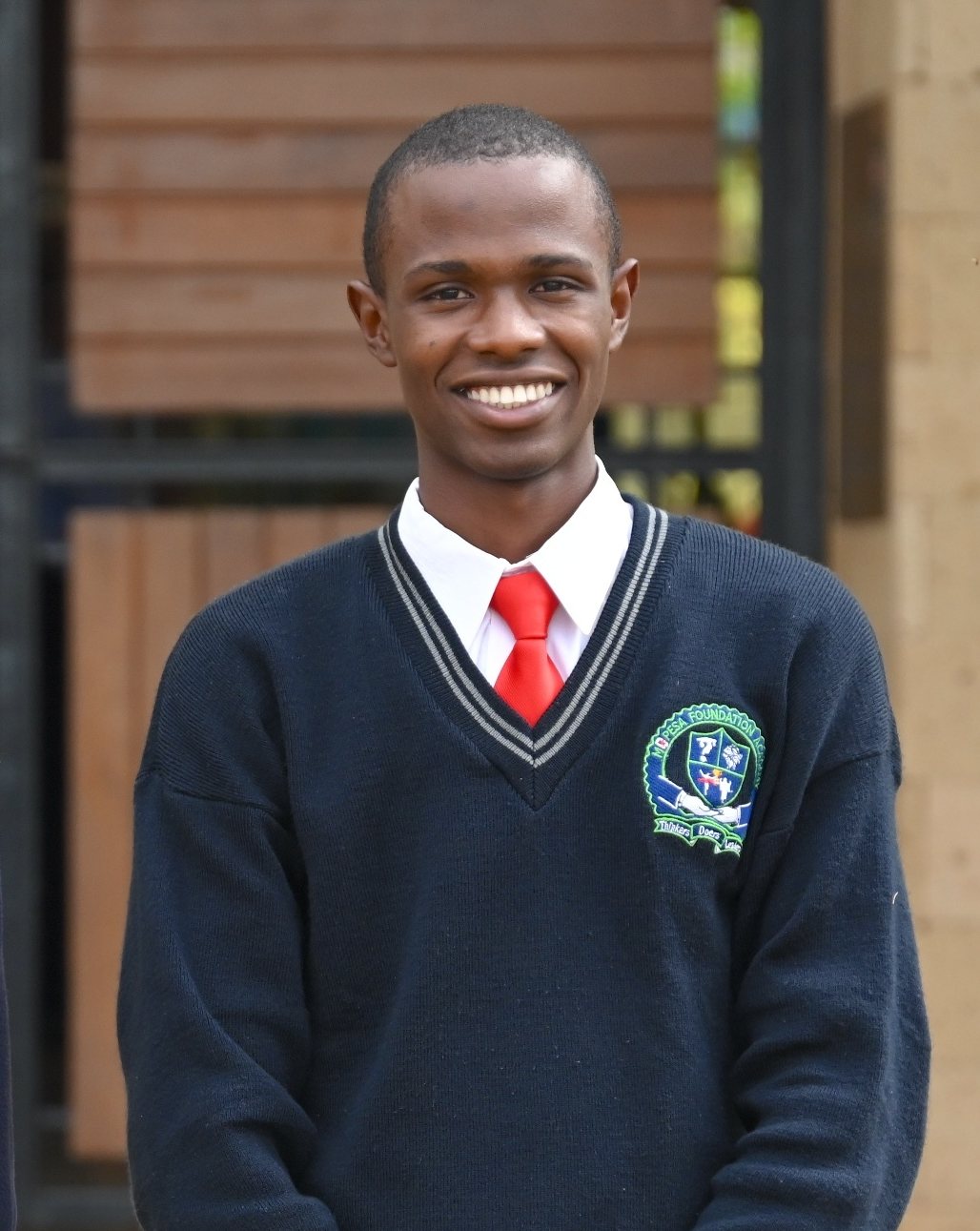
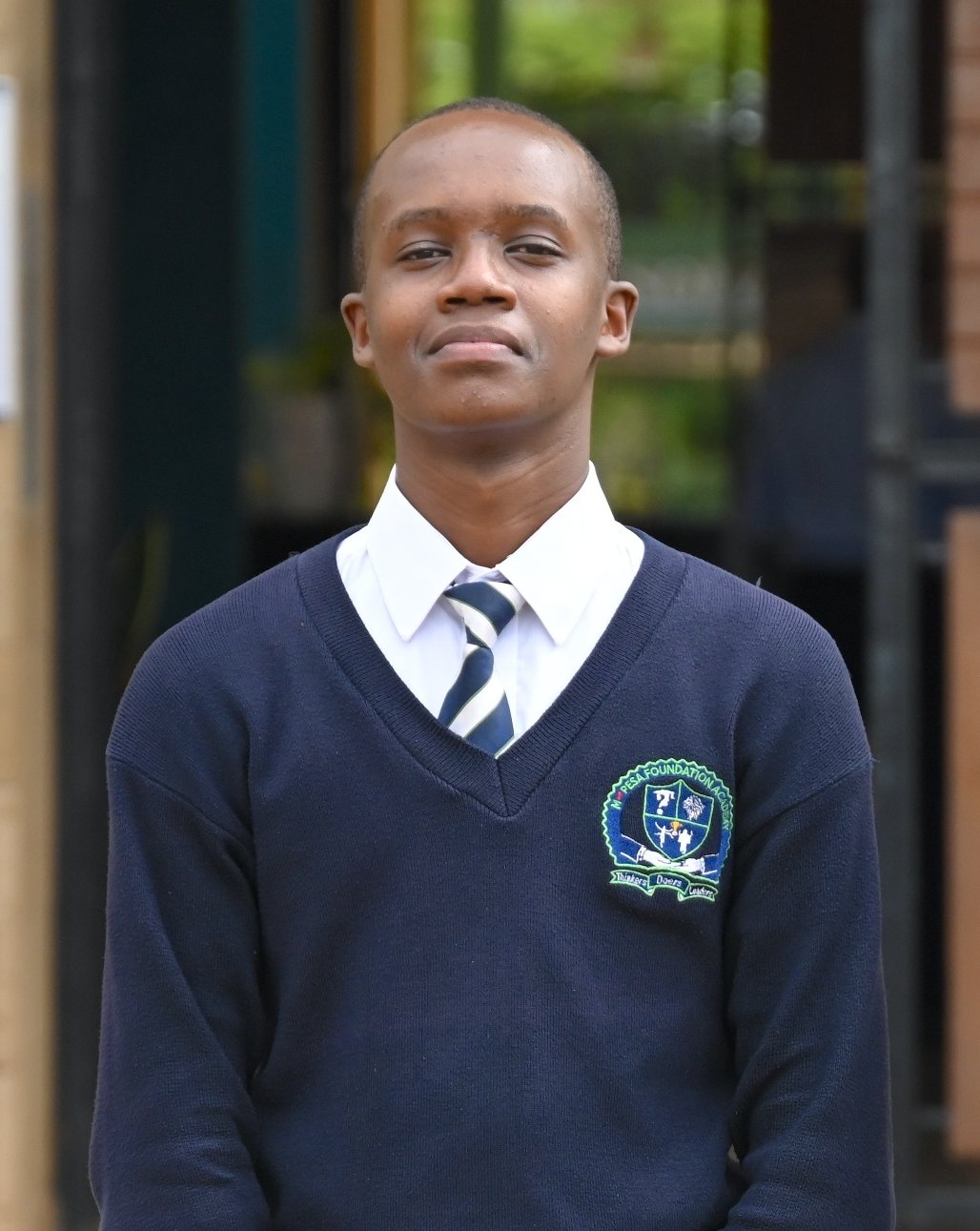
Fredrick Njoroge Kariuki and HewaSafi
For Fredrick Njoroge Kariuki, air pollution is not an abstract topic. Raised in Naivasha, in an industrial part of Nakuru County, he developed a chronic lung condition at the age of ten and still relies on weekly medication. His bronchitis eventually pushed him to see dirty air as a health crisis rather than only an environmental one, and that conviction became the starting point for HewaSafi, Swahili for clean air.
Together with classmate Miron Onsarigo at M-PESA Foundation Academy, Fredrick co-developed a low-cost exhaust filter for the matatus and boda bodas that crowd Kenyan roads. The multi-stage system draws on maize cobs, coconut shells and other farm residues, plus a living algae layer. In trials on five matatus along Thika Road, the team reported cutting fine particulate matter by about 93 percent and carbon monoxide by about 42 percent, with a prototype costing roughly a third of conventional filters. Because the parts are cheap and locally sourced, the device is also less tempting to thieves.
In May 2026 HewaSafi was named the Africa regional winner of The Earth Prize, run by the Geneva based Earth Foundation, earning USD 12,500 to refine the design. Fredrick, who is also drawn to carbon capture, wants the team to franchise the technology across Africa so other children do not grow up with the illness he lives with. Next steps include a run of 1,200 units built with local artisans and adoption through Eastleigh Matatu SACCO.
I didn't choose this problem, it chose me.Fredrick Njoroge Kariuki · source
Highlights
- Africa regional winner, The Earth Prize 2026 (USD 12,500)
- Named among the Earth Prize 2026 top 35 teams worldwide
- Field tests on five Thika Road matatus: about 93% PM2.5 and 42% carbon monoxide reduction (2026)
- Planned rollout with Eastleigh Matatu SACCO and a 1,200 unit production run